COVID-19 and OT
Earn 1 hour of AOTA-approved CE from this course on COVID-19 and OT with Torrie Niewohner, OTR/L.
So much about the COVID-19 era feels unpredictable and beyond our control.
But, the research analysis covered in this course will open your eyes to some ways where we can be extremely helpful. Not only can you use your occupational therapy skills to help patients in acute care, but you can even help those who are home with mild symptoms.
I know we say this at OT Potential a lot, but your skill set is desperately needed.
The course will begin with a breakdown of some current research on COVID. Then, Torrie Niewohner, an occupational therapist who treats patients with COVID-19 in the inpatient setting, will join us to discuss practical takeaways.
Download the handouts about COVID-19 recovery from John Hopkins that are discussed in the podcast.
Wang, Tina J. MD; Chau, Brian MD; Lui, Mickey DO; Lam, Giang-Tuyet MD; Lin, Nancy MD; Humbert, Sarah MD Physical Medicine and Rehabilitation and Pulmonary Rehabilitation for COVID-19, American Journal of Physical Medicine & Rehabilitation: September 2020 - Volume 99 - Issue 9 - p 769-774
Intro (5 minutes)
Breakdown of research analysis of COVID-19 Rehab (10 minutes)
Discussion on practical implications for OTs (with guest Torrie Niewoner) (45 minutes)
1 hour (0.1 AOTA CEUs). Released online from Aurora, NE.
Occupational therapy practitioners who work with patients who have COVID-19. The educational level is introductory.
This course is an independent/self-study course delivered via podcast.
If you need accommodations to take this course, please contact us and we will address your needs on an individual basis.
If this course were to be cancelled, please see our cancellation policy on our terms page.
In order to receive a certificate for this course, you will need to listen to the entire podcast and take the post-course quiz. You must earn 75% or higher to pass and receive credit. If you pass, a certificate will be automatically generated for you to download. The certificate will also be saved to your account for future download as needed.
It is the policy of OT Potential to disclose any financial and non-financial interest the provider or instructor may have in a product or service mentioned during an activity. This is to ensure that the audience is made aware of any bias of the speaker.
We here at OT Potential have no financial stake in this topic. Our guest, Torrie Niewohner, has no financial interest in this topic to disclose.
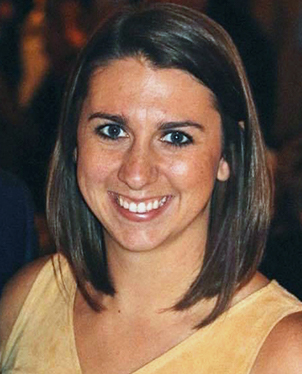
Torrie never wants to stay in one spot. After graduating with her bachelor’s degree in Early Education and Child Development, she went on to get her OT degree at Nebraska Methodist. Now, as a licensed therapist, she works at Nebraska Medicine in the surgical intensive care unit and the step-down critical care unit, where she has found a passion for early intervention with poly-trauma patients.
She hopes to continue learning as she works toward a transition into the neonatal therapy world, providing early intervention to children 0 to 5 years of age.
Outside of OT, Torrie enjoys being outdoors, spending time with her golden doodle, Miley, and baking delicious treats for friends and family.
 Sarah’s passion is helping fellow OT practitioners translate evidence into daily practice. Sarah earned her BA in religion from St. Olaf College, then earned her master’s degree in occupational therapy from New York University in 2011. Since then, she’s worked in numerous facilities, including a critical access hospital, an acute trauma hospital, and a state inpatient psychiatric hospital.
Sarah is the founder/owner of OT Potential. Read more about OT Potential here.
OT Potential designed this course to meet the requirements for “online” and “independent/self-study” courses. For more details read their blog post: Can I earn OT CEUS from a podcast? To verify the requirements from your specific state (within the US), check out our post, OT Continuing Education Explained. If you are outside of the United States and have questions, please contact us.
We are proud to be an AOTA Approved Provider and to meet the requirements for your NBCOT renewal.